Weight Stack Pin Stuck or Won't Select? Here's What's Wrong
A stuck or hard-to-insert weight stack pin is usually caused by misaligned plate holes — the plates have drifted slightly out of vertical alignment on the guide rods, so the pin hole no longer lines up cleanly through the stack. Corrosion or dried lubricant buildup inside the plate holes, and bent or worn guide rods, are the other common causes.
Share: Facebook · LinkedIn · X
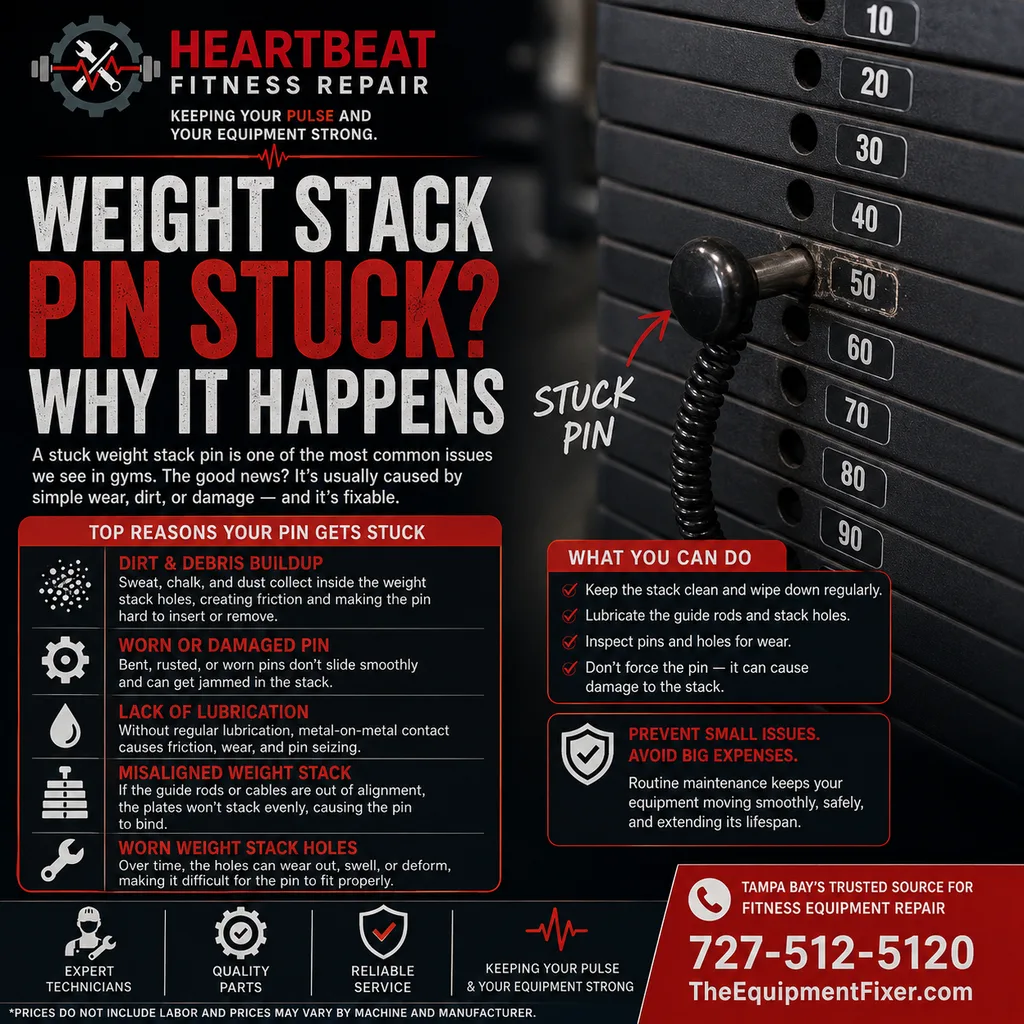
A stuck or misbehaving weight stack pin is one of the most common calls we get on selectorized strength machines — and it's also one of the more overlooked safety issues in a gym, since people tend to force it rather than report it. Here's what's usually going on and what it takes to fix.
Pin Won't Insert Smoothly
On a healthy machine, the pin slides through the stacked plates with light, even resistance. When it's suddenly hard to insert, tight in some plates and loose in others, or requires wiggling to seat, the plates have usually drifted slightly out of vertical alignment on the guide rods. This is a normal wear pattern over years of use — the guide rod bushings inside each plate wear unevenly, letting the plates tilt just enough to throw off hole alignment through the stack.
Corrosion and dried, gummed-up lubricant inside the plate holes can cause the same symptom, especially on equipment in non-climate-controlled spaces — see our guide on Tampa Bay humidity and equipment damage for why this happens faster here than in drier climates.
Pin Inserts But Doesn't Select the Right Weight
If the pin goes in cleanly but the wrong number of plates lift — or nothing lifts at all — the cause is different:
- A bent pin that no longer sits flush against the plate it's engaging
- A worn or oversized pin hole in one plate that lets the pin pass through without engaging the plates below it
- The lifting rod or cable connection to the top plate has slipped, so the top plate no longer pulls the rest of the stack with it
A pin that seats fully but lifts no plates at all usually points to that last cause — the stack has effectively disconnected from the lifting mechanism, which needs a technician to reseat and inspect properly rather than a quick fix at the machine.
Don't Force a Stuck Pin
Forcing a stuck pin — with pliers, a mallet, or repeated hard shoves — is a real safety risk. If the pin only partially seats and then slips under load, the full weight stack can drop suddenly. That can damage the cable, guide rods, and plates, and it's a genuine injury risk to anyone using or standing near the machine. If a pin doesn't insert with light, even pressure, back it out and report it rather than working around it.
Fixing Plate Misalignment
The repair usually involves inspecting the guide rod bushings inside each plate for wear, cleaning corrosion and dried lubricant out of the plate holes, and confirming the guide rods themselves haven't bent from an impact or overload. On commercial machines with very high daily use — gyms, hotels, apartment fitness centers — bushing wear that lets plates tilt slightly is the most common root cause, and it's a routine, inexpensive fix once properly diagnosed. A full guide rod replacement is needed less often but is quoted in writing if that's what's actually required.
How Much Does It Cost to Fix a Stuck Weight Stack Pin?
The service call fee of $149.99–$169.99 (residential & commercial) covers travel, a full diagnostic, and the first hour of labor. Guide rod bushing replacement, cleaning, and lubrication typically run $99–$199 depending on what's worn. See our cable pulley system repair guide if a cable issue is contributing, and our pricing page for a full cost breakdown.
Frequently Asked Questions
- Why is my weight stack pin stuck or hard to insert?
- A stuck or hard-to-insert weight stack pin is usually caused by misaligned plate holes — the plates have drifted slightly out of vertical alignment on the guide rods, so the pin hole no longer lines up cleanly through the stack. Corrosion or dried lubricant buildup inside the plate holes, and bent or worn guide rods, are the other common causes. Humidity accelerates hole corrosion in Florida in particular.
- Why won't the pin select the correct weight plate?
- If the pin goes in but the wrong number of plates lift (or none at all), the pin itself may be bent, the plate it's inserted into may have a worn or oversized hole so it doesn't engage the plates below it, or the cable/lifting mechanism connecting the top plate to the cable has slipped out of position. A pin that appears to seat fully but doesn't lift any plates usually means the plate stack has separated from the lifting rod.
- Is a stuck weight stack pin dangerous to use?
- Forcing a stuck pin is a real risk — if it's only partially seated and slips out under load, the full weight stack can drop unexpectedly, which can damage the machine and injure anyone nearby. If a pin doesn't insert smoothly on the first try, don't force it or use pliers; back it out, check for visible misalignment, and have it inspected if the problem persists.
- How do you fix weight stack plate misalignment?
- Fixing plate misalignment usually involves inspecting and straightening or replacing worn guide rod bushings, cleaning corrosion and dried lubricant out of the plate holes, and confirming the guide rods themselves aren't bent. On commercial machines with very high daily use, bushing wear that lets plates tilt slightly is the most frequent root cause and is a routine, inexpensive fix once diagnosed.
- How much does it cost to fix a stuck weight stack pin in Tampa Bay?
- The service call fee of $149.99–$169.99 (residential & commercial) covers travel, a full diagnostic, and the first hour of labor. Guide rod bushing replacement, cleaning and lubrication, or pin/plate hole repair typically run $99–$199 depending on what's actually worn. A full guide rod replacement, needed less often, costs more and is quoted in writing before work begins.
Frequently Asked Questions
- Why is my weight stack pin stuck or hard to insert?
- A stuck or hard-to-insert weight stack pin is usually caused by misaligned plate holes — the plates have drifted slightly out of vertical alignment on the guide rods, so the pin hole no longer lines up cleanly through the stack. Corrosion or dried lubricant buildup inside the plate holes, and bent or worn guide rods, are the other common causes. Humidity accelerates hole corrosion in Florida in particular.
- Why won't the pin select the correct weight plate?
- If the pin goes in but the wrong number of plates lift (or none at all), the pin itself may be bent, the plate it's inserted into may have a worn or oversized hole so it doesn't engage the plates below it, or the cable/lifting mechanism connecting the top plate to the cable has slipped out of position. A pin that appears to seat fully but doesn't lift any plates usually means the plate stack has separated from the lifting rod.
- Is a stuck weight stack pin dangerous to use?
- Forcing a stuck pin is a real risk — if it's only partially seated and slips out under load, the full weight stack can drop unexpectedly, which can damage the machine and injure anyone nearby. If a pin doesn't insert smoothly on the first try, don't force it or use pliers; back it out, check for visible misalignment, and have it inspected if the problem persists.
- How do you fix weight stack plate misalignment?
- Fixing plate misalignment usually involves inspecting and straightening or replacing worn guide rod bushings, cleaning corrosion and dried lubricant out of the plate holes, and confirming the guide rods themselves aren't bent. On commercial machines with very high daily use, bushing wear that lets plates tilt slightly is the most frequent root cause and is a routine, inexpensive fix once diagnosed.
- How much does it cost to fix a stuck weight stack pin in Tampa Bay?
- The service call fee of $149.99–$169.99 (residential & commercial) covers travel, a full diagnostic, and the first hour of labor. Guide rod bushing replacement, cleaning and lubrication, or pin/plate hole repair typically run $99–$199 depending on what's actually worn. A full guide rod replacement, needed less often, costs more and is quoted in writing before work begins.
Related Services in Tampa Bay
- Strength Equipment Repair in Tampa, FL
- Strength Equipment Repair in Clearwater, FL
- Strength Equipment Repair in St. Petersburg, FL
- Strength Equipment Repair in Brandon, FL
- Strength Equipment Repair in Sarasota, FL
- All Strength Equipment Repair Service Areas
- Schedule a Repair — Same-Week Appointments Available
Strength Equipment Repair in Tampa Bay
- Strength Equipment Repair in Tampa, FL
- Strength Equipment Repair in Clearwater, FL
- Strength Equipment Repair in St. Petersburg, FL
- All Strength Equipment Repair Service Areas
- Full Pricing Breakdown
- Schedule a Repair — Same-Week Appointments Available
Need Strength Equipment Repair in Tampa Bay?
Heartbeat Fitness Repair provides on-site strength equipment repair and maintenance throughout Pinellas, Hillsborough, Manatee, Sarasota, and Pasco counties. Factory-trained technicians. Written quotes before any work begins. Same-week scheduling.
Call 727-512-5120 — Monday–Friday 5 AM–7 PM, Saturday 7 AM–2 PM — or book a repair online.
Written Quote Before Any Work Begins
Prices shown are starting estimates — actual cost varies by brand, model, and parts availability. We always provide an exact written quote before we touch your machine, so there are no surprises on the invoice. We’re also an authorized warranty repair provider for many major manufacturers. Call 727-512-5120 for pricing on your specific unit.