The Equipment Fixer Podcast — Heartbeat Fitness Repair
Short, AI-produced discussion episodes about fitness equipment repair, maintenance, and buying decisions — grounded in facts already published on this site (pricing, warranty coverage, service guides). New episodes cover the questions Tampa Bay homeowners, gyms, and facility managers ask us most.
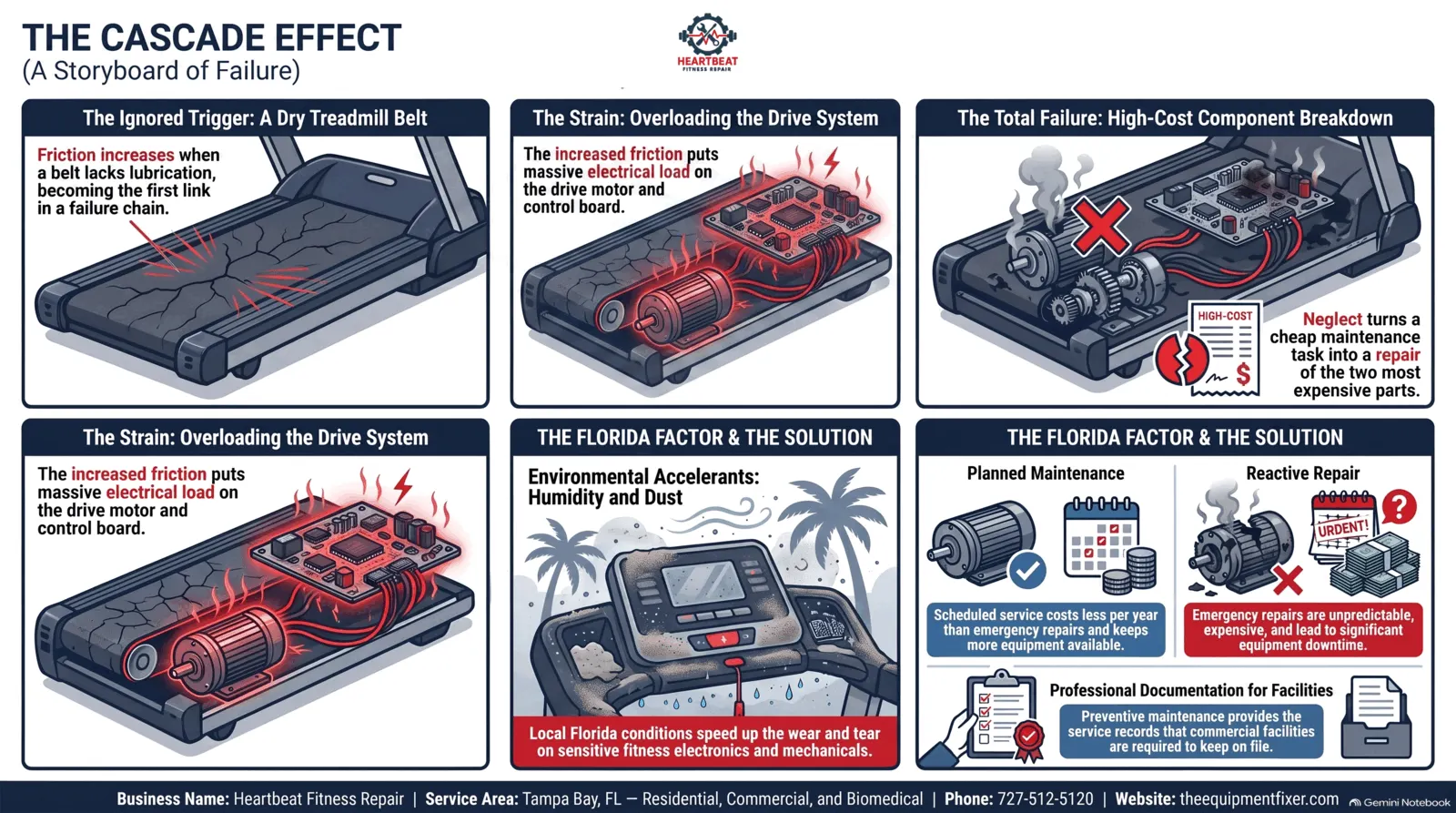
Episode 1: Why Fitness Equipment Fails Before Its Time
Most expensive equipment repairs didn't start out expensive — they started as small, ignored ones. We break down the "cascade effect" (how a dry treadmill belt turns into a motor and control board repair), why Tampa Bay humidity and dust accelerate wear, and why planned maintenance consistently costs less per year than waiting for something to break.
Listen to Episode 1 on YouTube
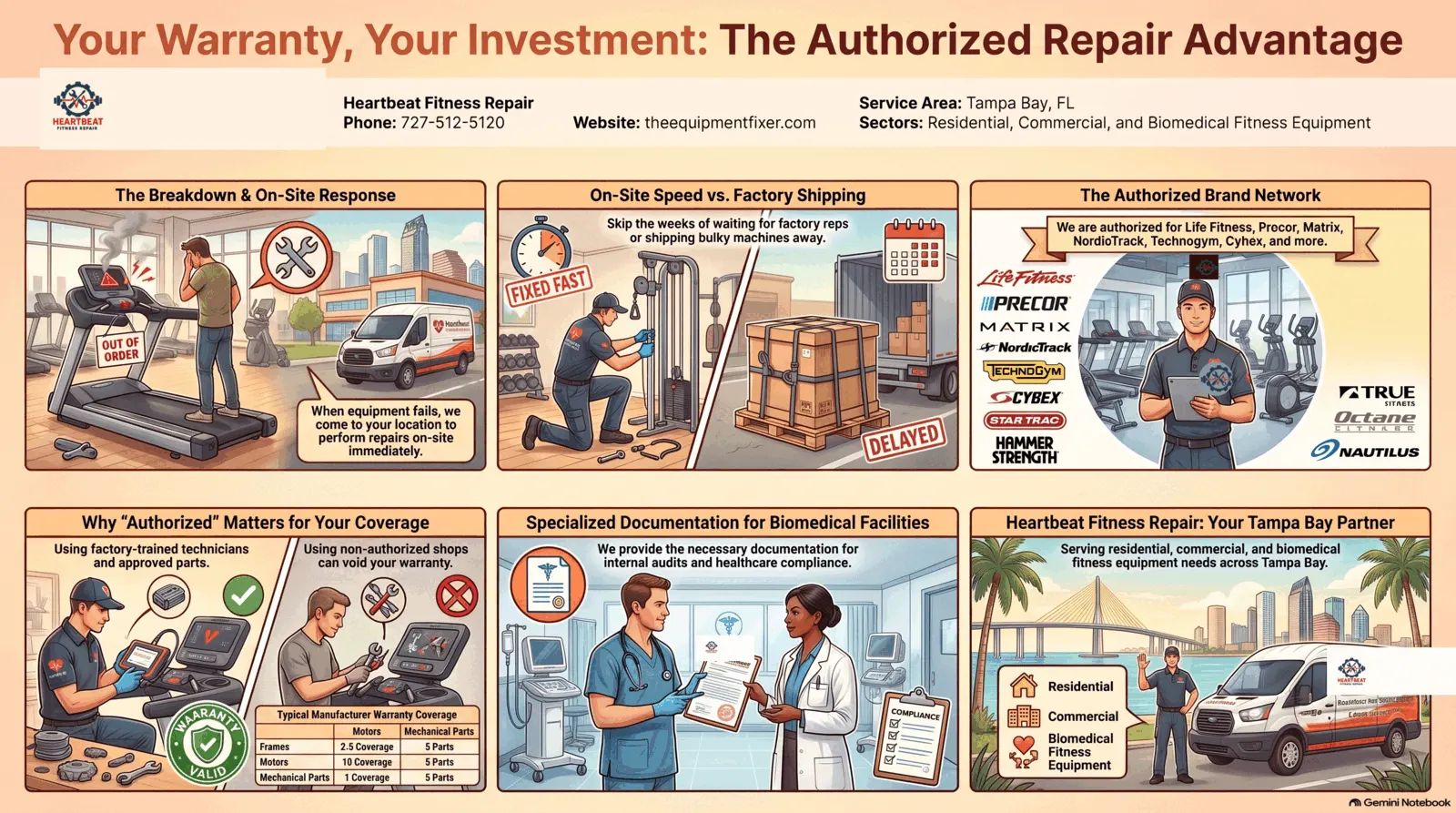
Episode 2: What Your Warranty Actually Covers (And What It Doesn't)
Warranty coverage and a service call are two different things. We cover which brands we're an authorized warranty provider for, what a manufacturer warranty typically excludes, and why using a non-authorized shop can put remaining coverage at risk.
Listen to Episode 2 on YouTube
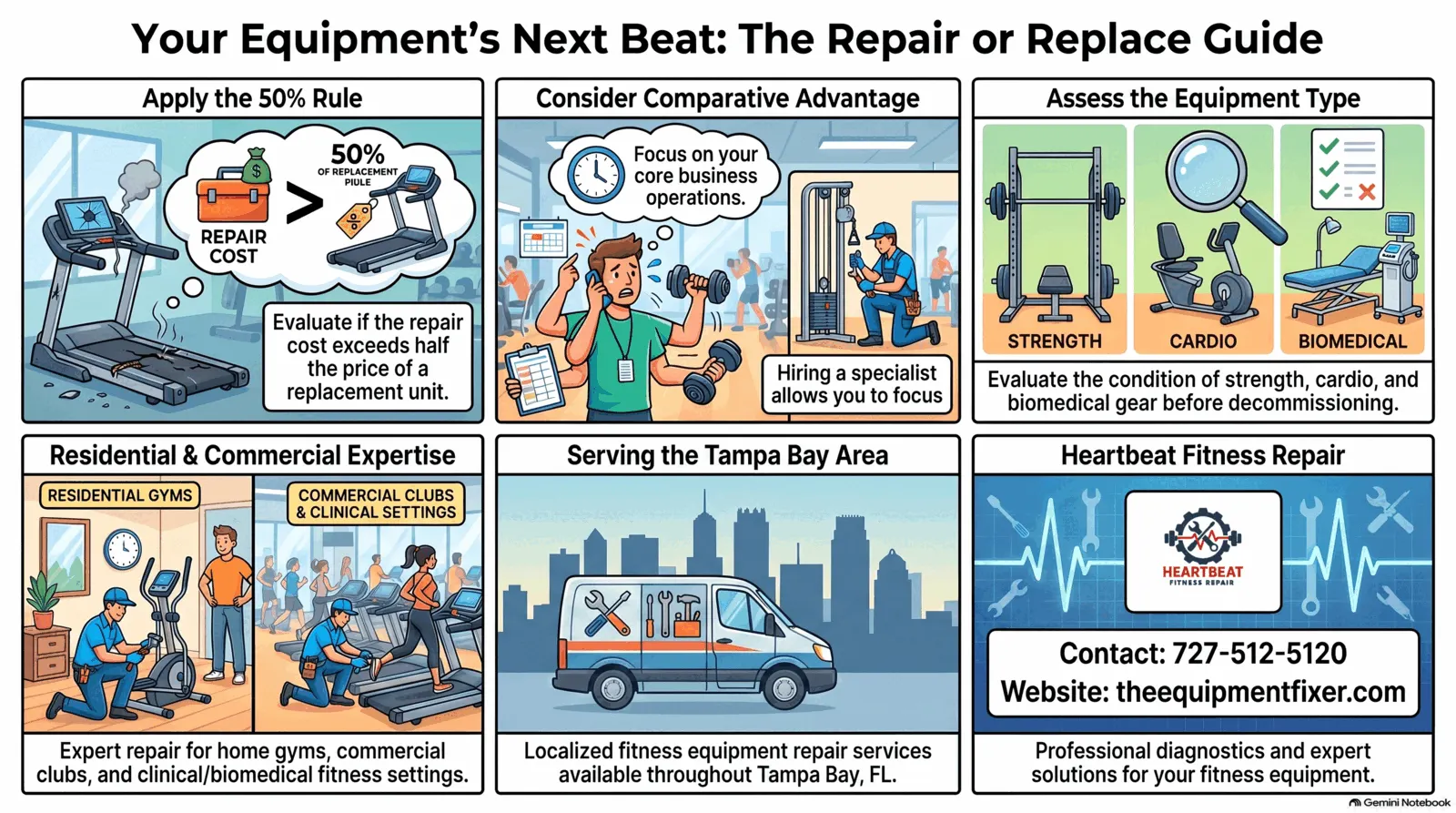
Episode 3: Repair or Replace? How We Make the Call
A real, repeatable framework for deciding whether to fix or replace a broken machine — part by part, from motor control boards to a cracked frame — instead of guessing.
Listen to Episode 3 on YouTube
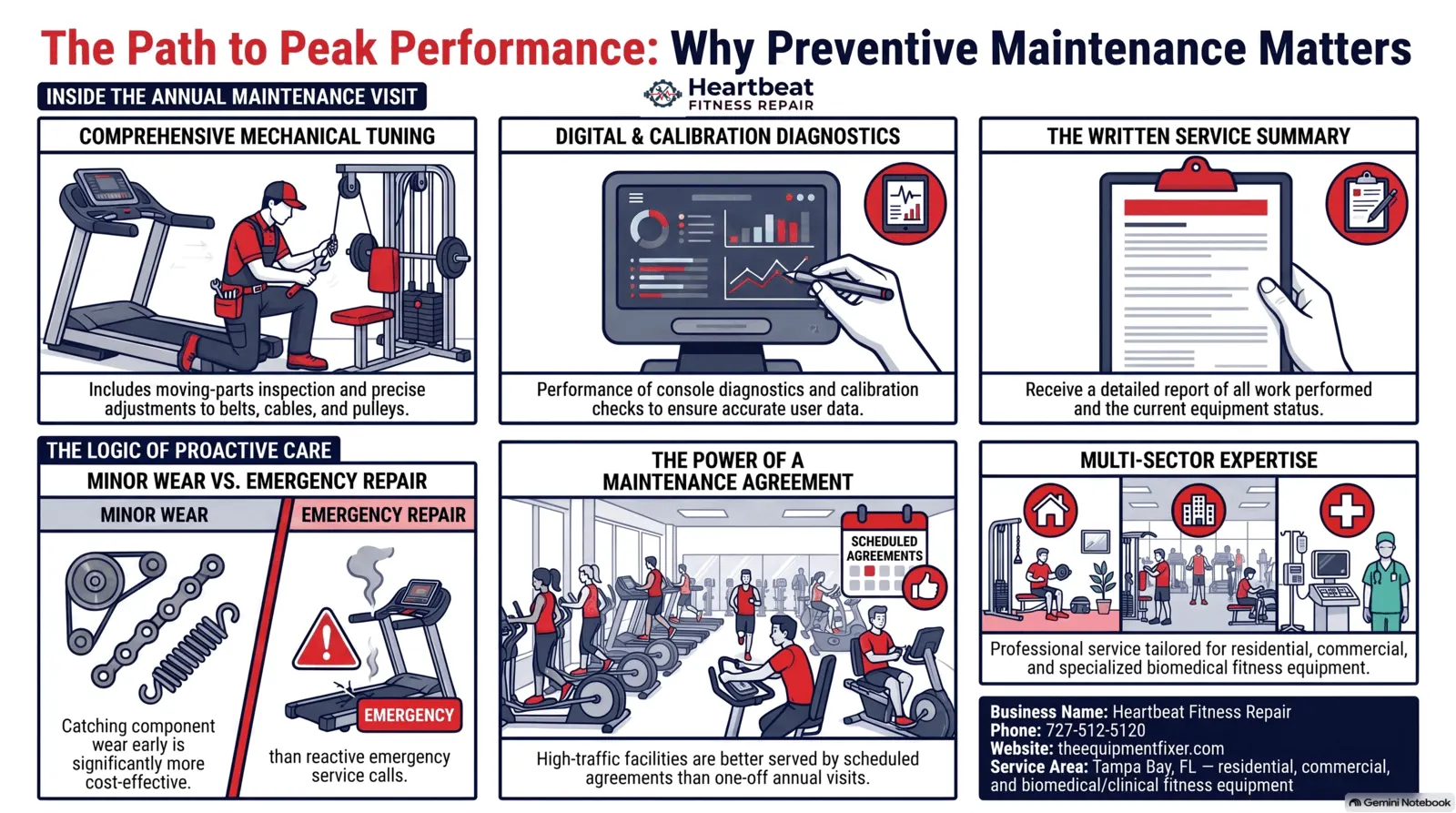
Episode 4: Preventive Maintenance: Why Skipping It Costs More Later
What's actually included in a preventive maintenance visit, how often it should happen based on usage, and why facility managers and HOA boards should treat it as documentation, not just upkeep.
Listen to Episode 4 on YouTube
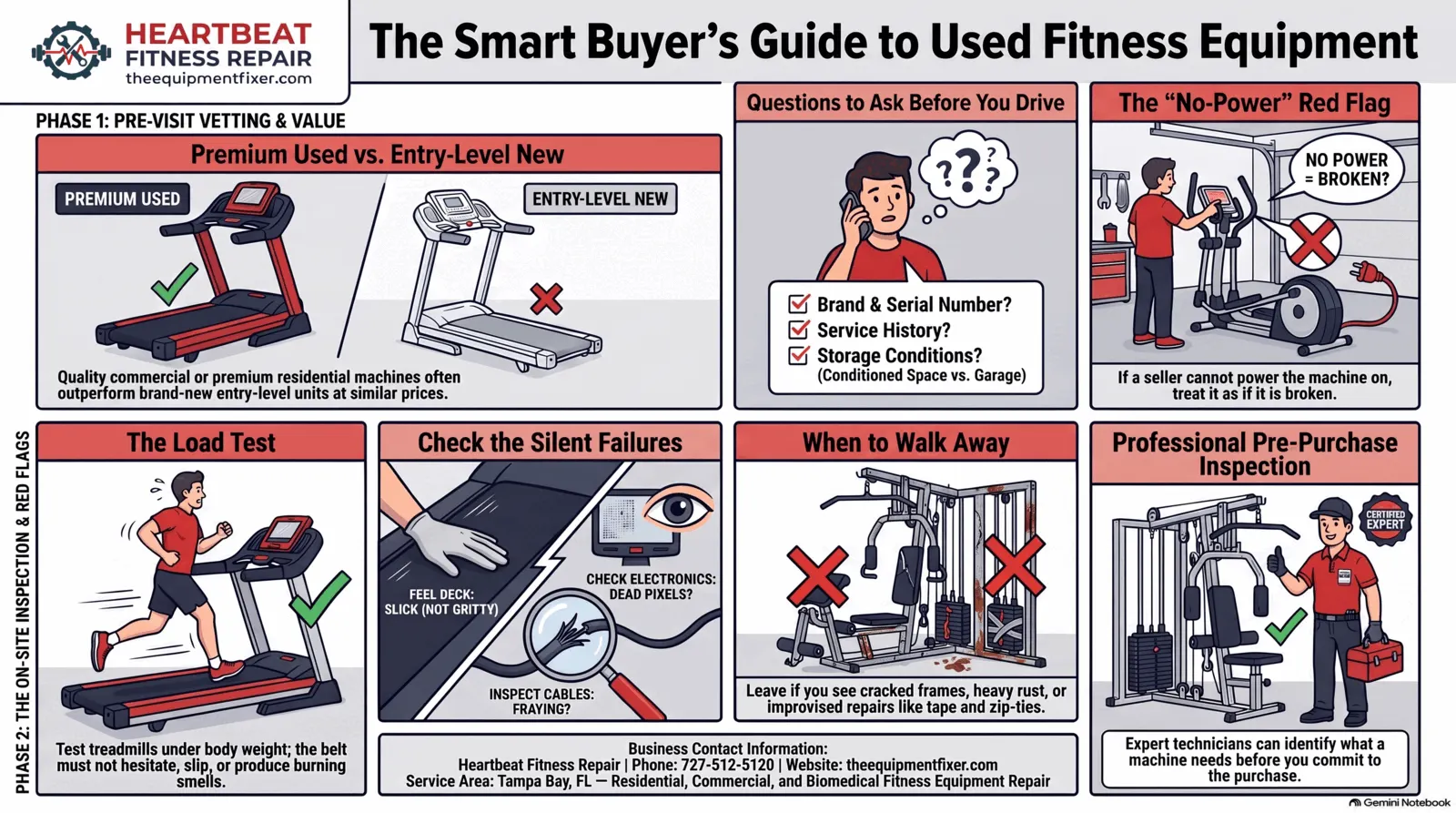
Episode 5: Buying Used Fitness Equipment — What to Check Before You Buy
The questions to ask a seller before you drive out, the single biggest red flag (a machine that won't power on), and the in-person checklist that separates a great used-equipment deal from an expensive mistake.
Listen to Episode 5 on YouTube
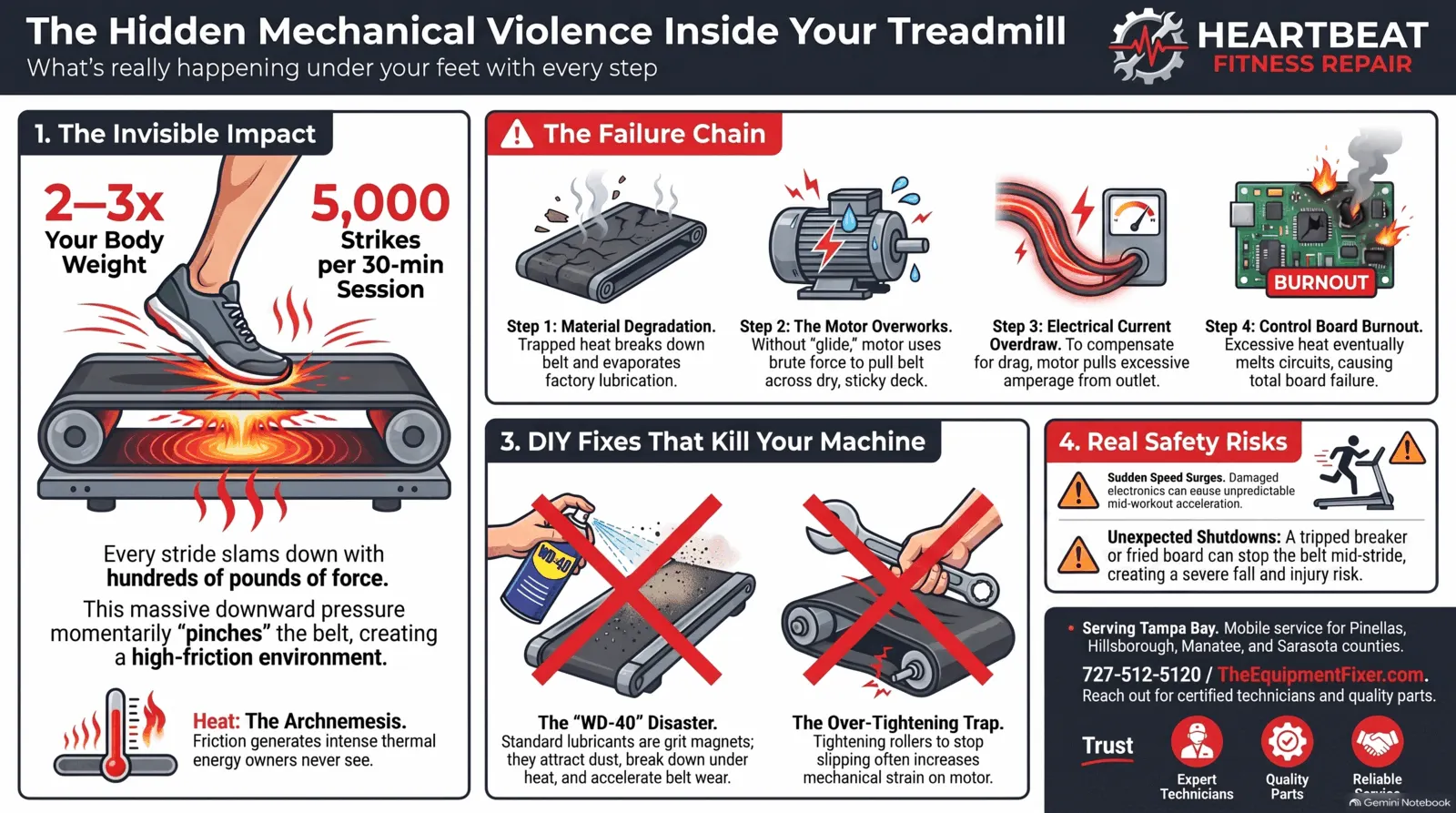
Episode 6: The Hidden Mechanical Violence Inside Your Treadmill
Every step on a treadmill lands with two to three times your body weight, trapping the belt between your foot and the deck and generating friction most owners never see or feel. We break down how that hidden heat degrades the belt and factory lubrication until the motor overdraws current and the control board burns out, why common DIY fixes like WD-40 and over-tightening the rollers actually accelerate the damage, and the real safety risks — sudden speed surges and mid-stride shutdowns — of ignoring it.
Listen to Episode 6 on YouTube
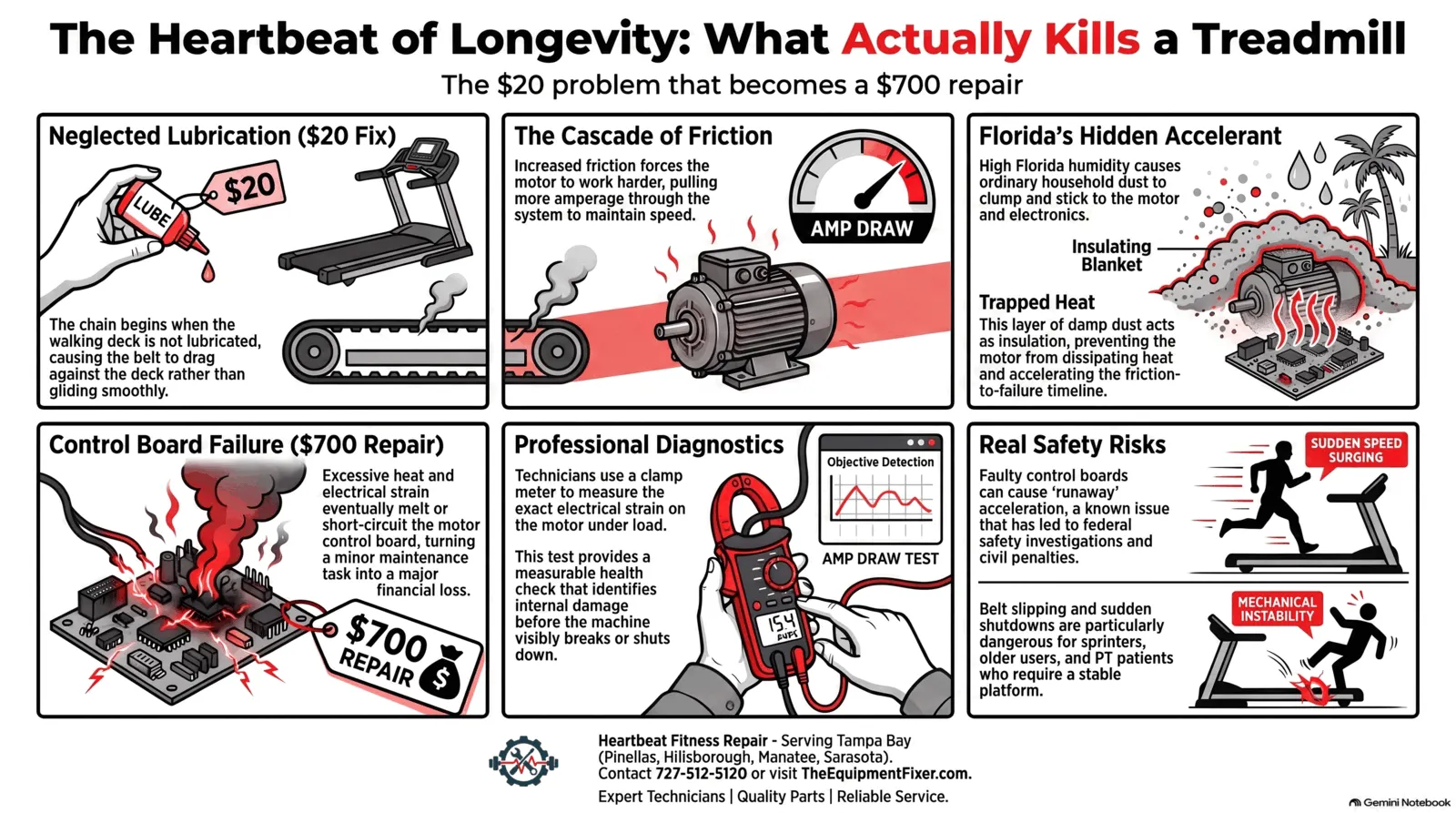
Episode 7: The Heartbeat of Longevity: What Actually Kills a Treadmill
The friction-to-failure chain that turns a $20 lubrication problem into a $700 control board repair, why an amp draw test with a clamp meter measures the exact strain a motor is under before anything visibly breaks, how Florida humidity turns dust into an insulating blanket over the motor, and the real safety risks — surging, slipping, sudden shutdowns — a poorly maintained treadmill creates for sprinters, older users, and rehab patients.
Listen to Episode 7 on YouTube
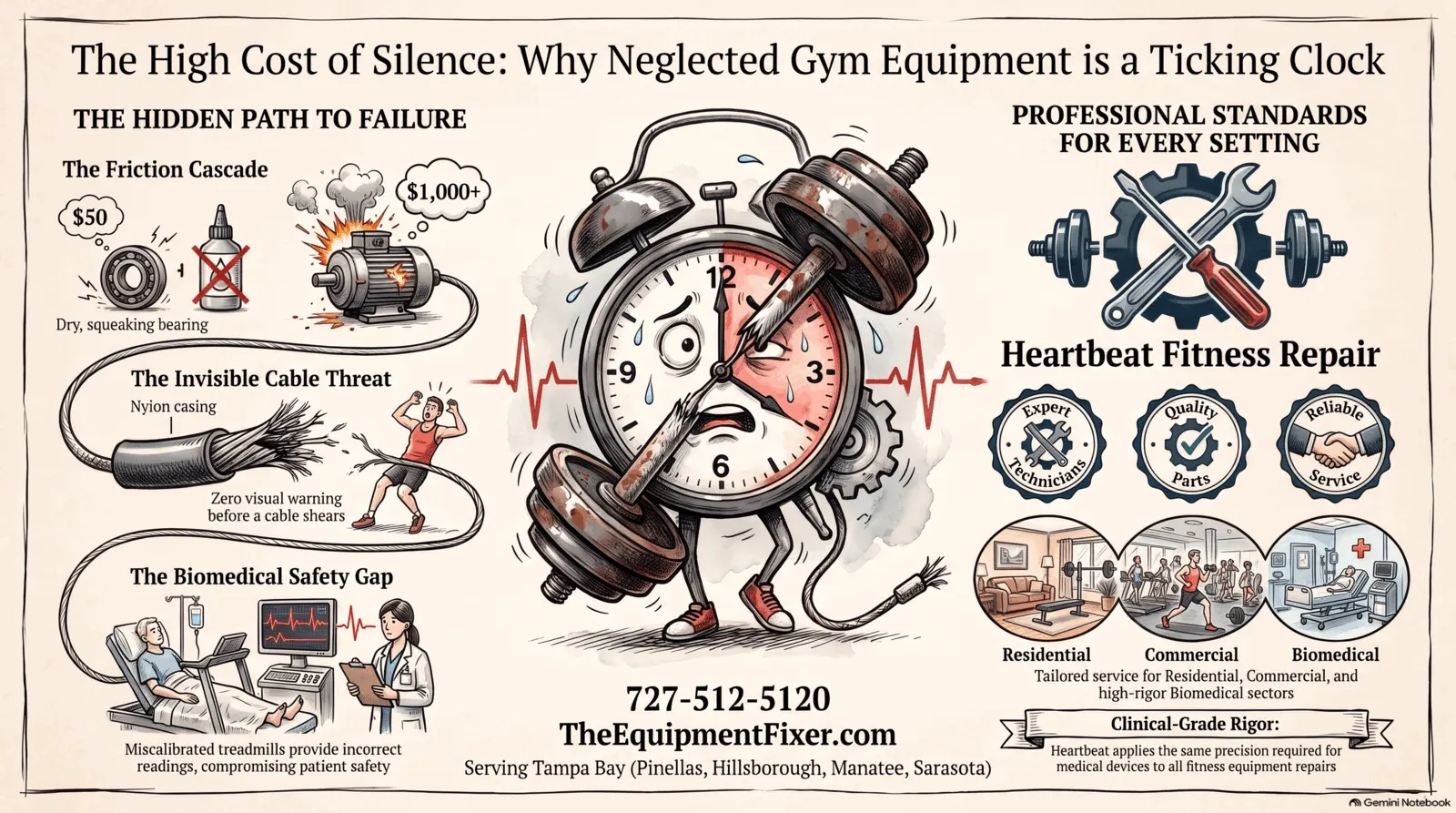
Episode 8: Hidden Risks of Neglected Gym Equipment: Inside Heartbeat's Repair, Fitness & Medical Divisions
The friction cascade that turns a $50 lubrication fix into a $1,000+ motor or control board replacement, why fraying steel cables inside nylon casing give zero visual warning before they shear, how Heartbeat's Residential, Commercial, and Biomedical divisions cover everything from home Pelotons to hospital cardiac rehab equipment, and why a miscalibrated treadmill in a cardiac rehab setting is a patient safety issue, not just a mechanical inconvenience.
Listen to Episode 8 on YouTube
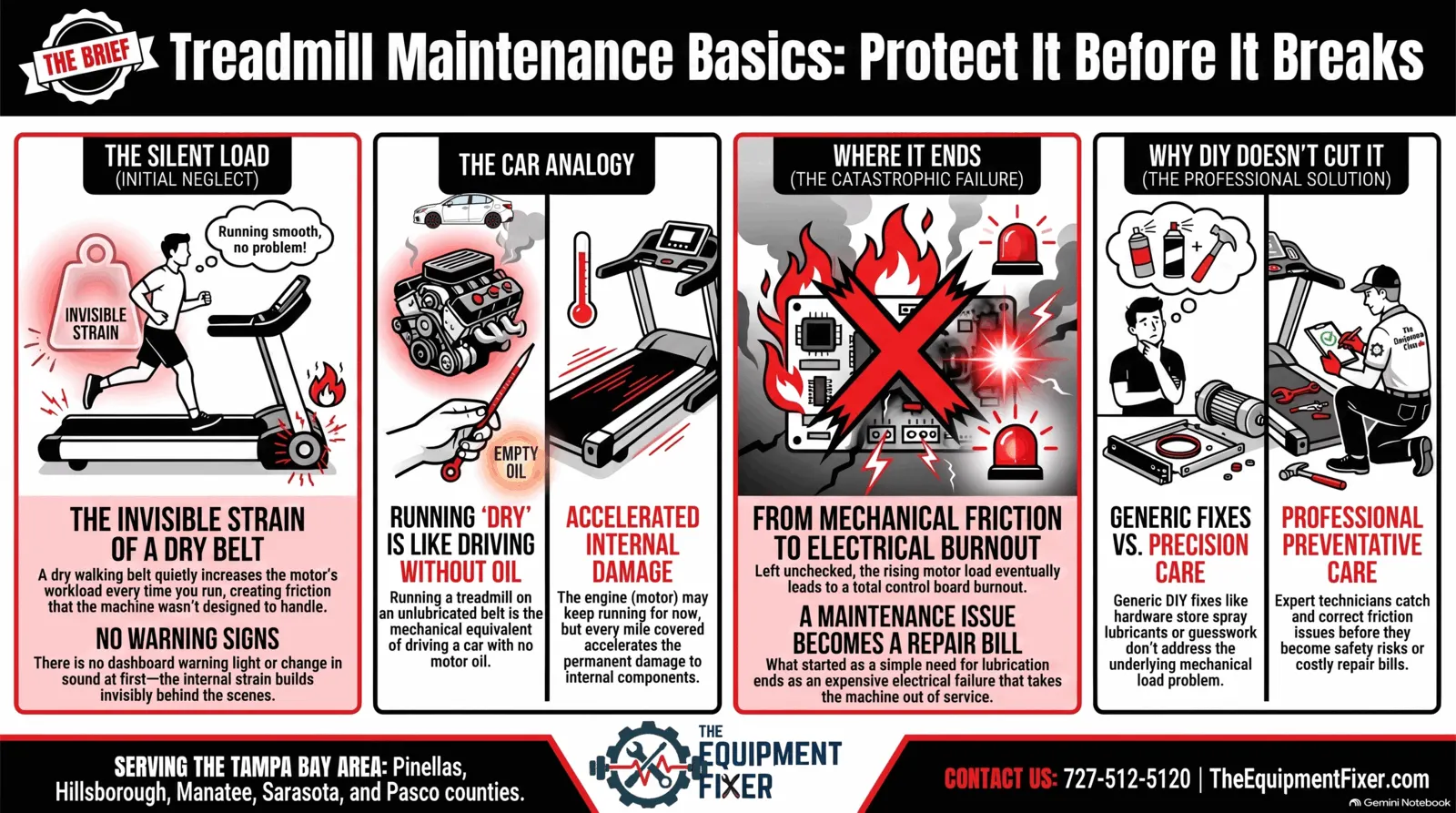
Episode 9: The Brief: Treadmill Maintenance Basics — Protect It Before It Breaks
A quick brief on the hidden mechanical toll of everyday treadmill use — how a dry walking belt quietly increases motor load until it causes control board burnout, why that's the equivalent of driving a car with no motor oil, the real safety risks of a poorly maintained machine, and why professional preventative care can't be replicated with generic DIY fixes.
Listen to Episode 9 on YouTube
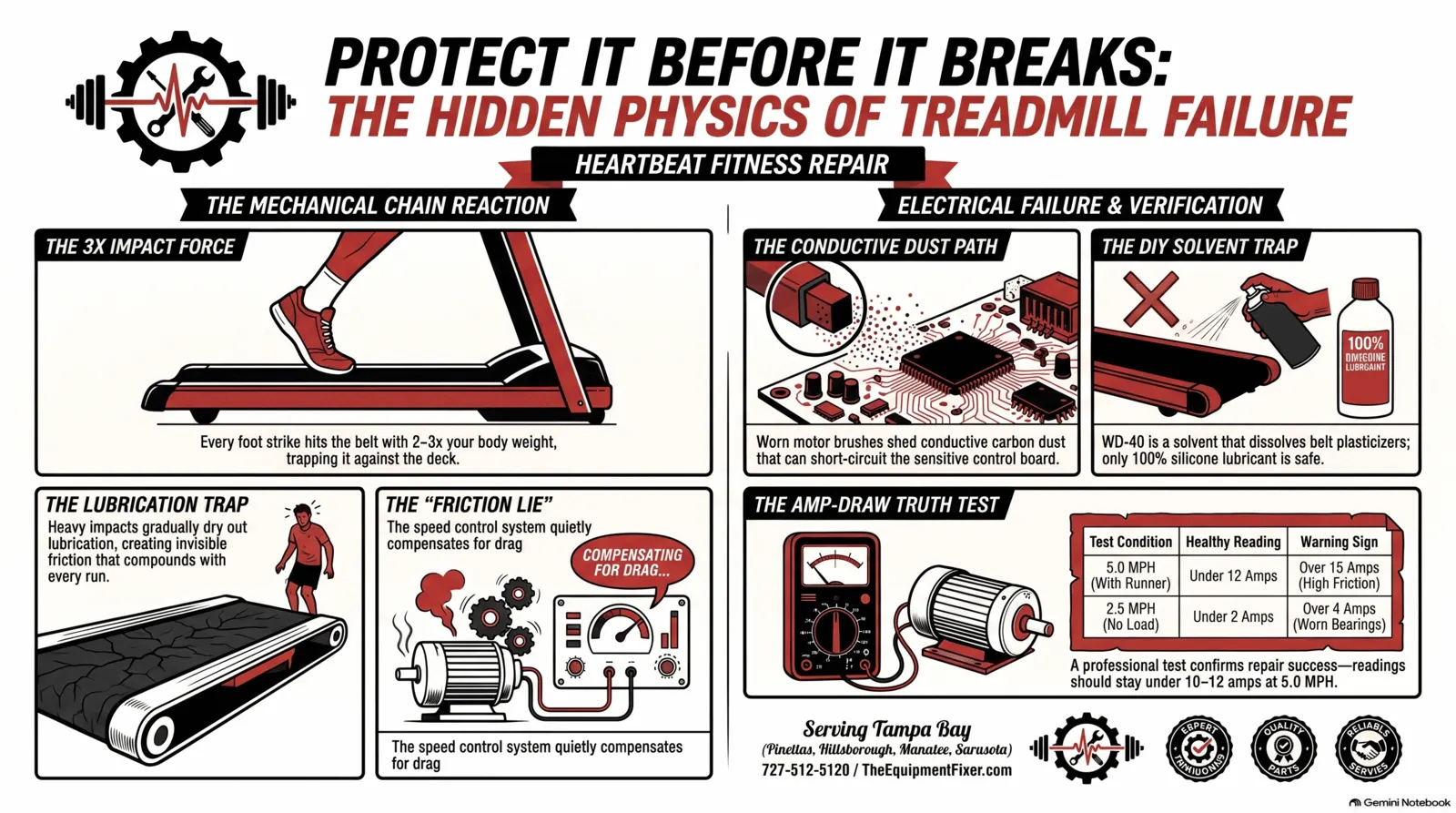
Episode 9: Protect It Before It Breaks: The Hidden Physics of a Home Treadmill
Every foot strike on a treadmill slams down with two to three times your body weight, trapping the belt against the deck and drying out its lubrication over time. We break down how the closed-loop speed control system compensates for that friction (and why a hesitation you can actually feel means it's already maxed out), why WD-40 and generic petroleum lubricants dissolve belt plasticizers instead of fixing them, how worn carbon motor brushes create conductive dust that can short-circuit the control board, and why a professional amp-draw test mathematically verifies a fix instead of guessing by ear.
Listen to Episode 9 on YouTube
Have a topic you'd like us to cover? Call 727-512-5120 or email Service@TheEquipmentFixer.com.
Frequently Asked Questions
- What is The Equipment Fixer Podcast?
- The Equipment Fixer Podcast is a series of short, AI-produced discussion episodes from Heartbeat Fitness Repair covering fitness equipment repair, maintenance, warranty coverage, and buying decisions — grounded in facts already published on this site.
- Where can I listen to Heartbeat Fitness Repair's podcast episodes?
- Episodes are published on YouTube and linked from this page as they're released. Call 727-512-5120 if you have a topic you'd like a future episode to cover.