
How to Care for Your Weight Stack Equipment
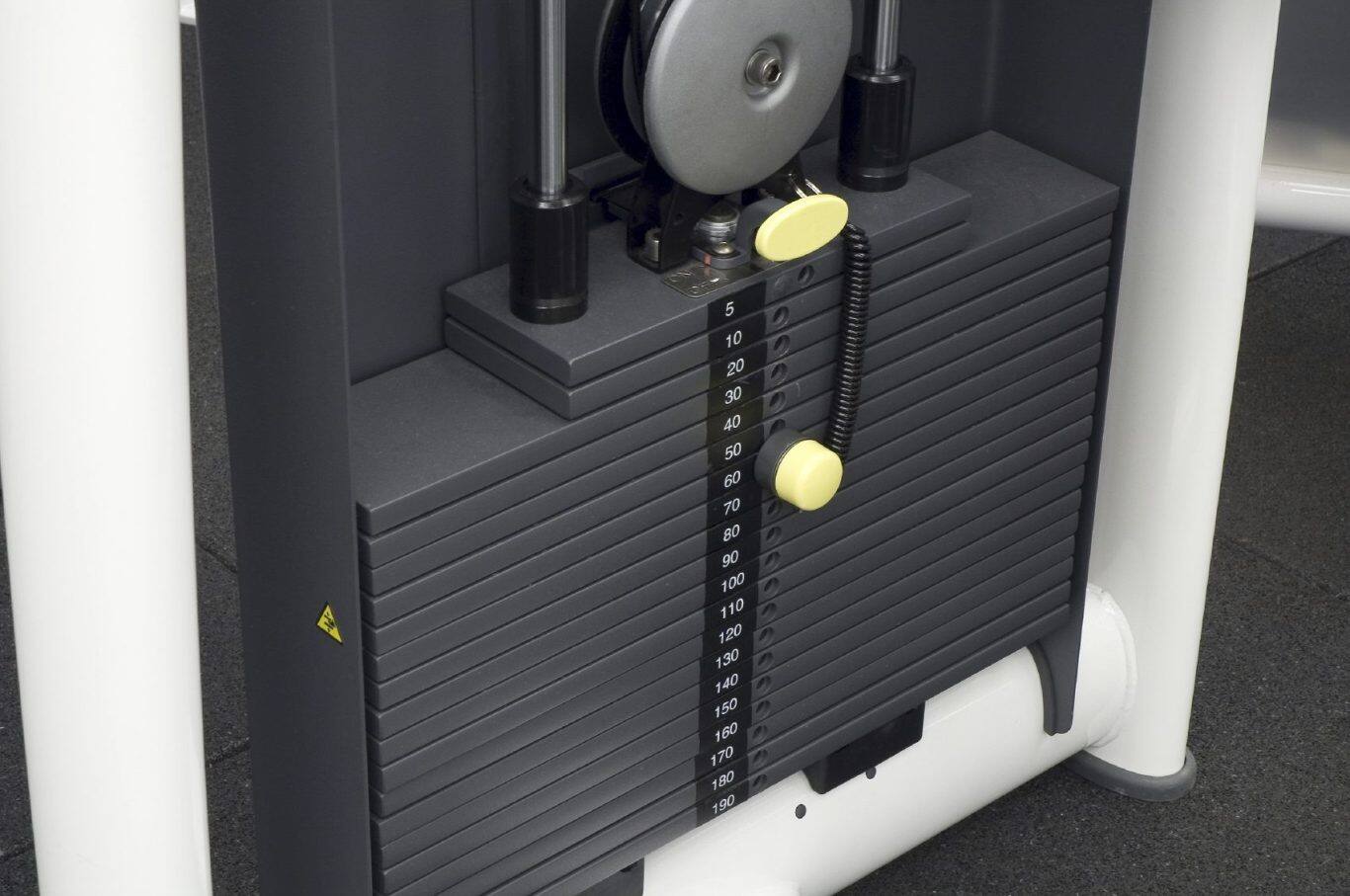
Cables, Guide Rods, Pulleys & Upholstery
Direct answer: inspect the cable, guide rods, and selector pin regularly — strength machines tend to fail suddenly and under load rather than gradually. Selectorized strength equipment is built to last decades, and most of it does. But unlike cardio equipment, when a strength machine fails it usually fails suddenly and under load — a cable lets go, a stack drops, a pin shears. The components that prevent that are all visible and easy to check.
Step-by-Step Care
1. Inspect the cable every month
Select a light weight and pull the cable through its full range slowly, watching the entire visible length as it travels. Look for fraying, broken strands, flattened or kinked sections, and any place the outer coating has split. Check swage fittings closely — corrosion there is partly hidden and is the most common failure point.
2. Wipe and lightly lubricate the guide rods
Wipe the guide rods clean with a dry cloth from top to bottom, then apply a very light film of silicone lubricant to a cloth and run it along each rod. Never use grease or petroleum-based products here.
3. Check the selector pin and lanyard
The pin should insert fully and smoothly and should not be bent, mushroomed, or worn thin at the tip. Confirm the retaining lanyard is intact and attached.
4. Look over the pulleys
Watch each visible pulley as the stack travels. Every pulley should spin freely and the cable should sit squarely in the groove. A pulley that no longer turns will saw through a cable quickly.
5. Listen and feel as the stack travels
Run the stack up and down slowly. It should move smoothly and quietly. Grinding, rattling, plates that tilt or bind, or a stack that drops harder than it should are all signs of worn bushings or a developing cable problem.
6. Clean the upholstery and check hardware monthly
Wipe pads and grips after each use with a mild cleaner — never bleach, ammonia, or alcohol. Once a month, check that visible frame hardware, seat adjustments, and handle attachments are snug.
Recommended Schedule
| How Often | What to Do |
|---|---|
| After each use | Wipe pads, grips, and handles; return the pin to a rest position. |
| Weekly | Confirm the stack travels smoothly and quietly; check the selector pin and lanyard. |
| Monthly | Inspect the full cable length for fraying; clean and lightly lubricate guide rods; check pulleys and hardware. |
| Every 3–6 months | Inspect upholstery for splits; check frame leveling and all adjustment mechanisms. |
| Annually | Schedule a professional preventive maintenance service. |
Please Avoid
- Using the machine if the cable shows any fraying or broken strands — no exceptions
- Grease or petroleum products on guide rods — light silicone only
- Over-lubricating, which collects grit and grinds the bushings
- Dropping or slamming the weight stack
- Using a bent, worn, or substitute selector pin
- Bleach, ammonia, or alcohol cleaners on vinyl upholstery
When to Call Us
- Any fraying, broken strands, or kinking in a cable
- A pulley that squeaks, sticks, or no longer spins freely
- The cable has jumped out of a pulley groove
- The stack binds, tilts, grinds, or drops unevenly
- A bent, worn, or missing selector pin, or a broken lanyard
- Torn upholstery, a loose seat or back pad, or a frame that rocks under load
Frequently Asked Questions
- How often should I inspect the cable on my weight stack machine?
- Inspect the cable every month. Select a light weight and pull the cable through its full range slowly, watching the entire visible length as it travels. Check swage fittings closely — corrosion there is partly hidden inside the terminal and is the most common failure point. Any fraying means the machine comes out of service immediately.
- What should I do if I see a frayed cable on my weight stack machine?
- Take the machine out of service immediately — no exceptions. A cable does not fail gradually once strands start breaking. It fails all at once, under load, with someone on the machine. Do not continue to use it until the cable has been replaced by a qualified technician.
- What lubricant should I use on weight stack guide rods?
- Use a light silicone lubricant applied with a cloth. Wipe the guide rods clean with a dry cloth first, then apply a very light film of silicone. Never use grease or petroleum-based products on guide rods — they attract grit and grind the bushings faster than the correct silicone film would.
- How do I check if the pulleys on my weight stack machine are working correctly?
- Watch each visible pulley as the stack travels up and down slowly. Every pulley should spin freely and the cable should sit squarely in the groove. A pulley that no longer turns will drag the cable across a stationary surface and saw through it. Squeaking or sticking from a pulley means it needs replacement — do not lubricate it.
Download the free PDF guide: How to Care for Your Weight Stack Equipment (PDF)
Back to all maintenance guides.
Heartbeat Fitness Repair — Tampa Bay, FL. Call 727-512-5120 or book online.