
How to Care for Your Smith Machine
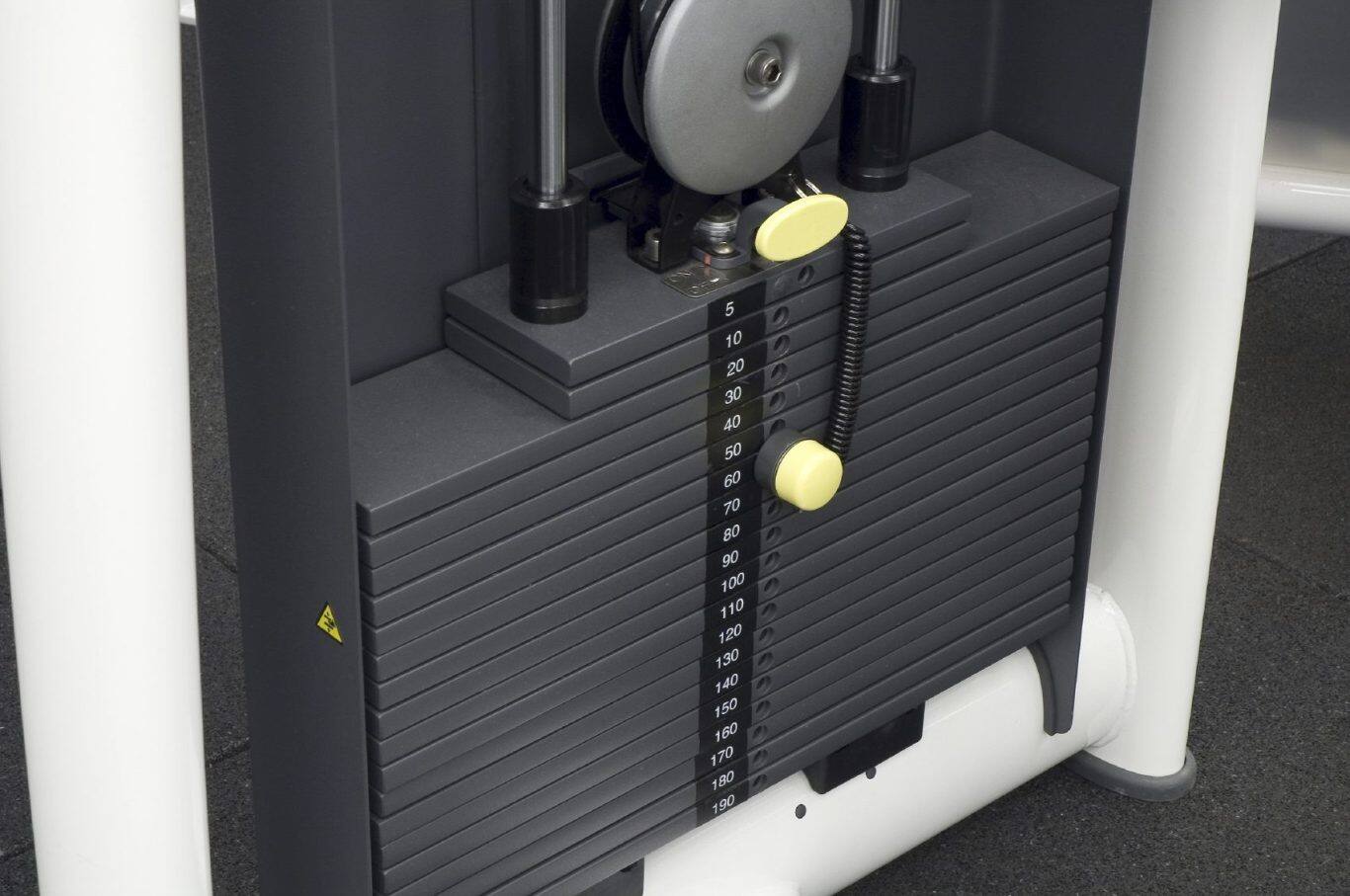
Guide Rails, Bearings, Counterbalance & Safety Stops
Direct answer: keep the guide rails clean and lightly lubricated, and inspect the safety stops and counterbalance cables regularly — most problems start with contaminated rails, not failed parts. A Smith machine is a barbell running on two fixed rails, which means the entire feel of the machine comes down to how clean those rails are and what condition the bearings or bushings are in. When a Smith machine starts feeling sticky, notchy, or noisy, the cause is almost always contamination on the rails rather than a failed component.
Step-by-Step Care
1. Clean the full length of both rails
Run the bar to the top of its travel, wipe the exposed lower section of both rails with a clean dry cloth, then run it to the bottom and wipe the upper section. You are removing chalk, dust, sweat residue, and old lubricant. Do this monthly at minimum.
2. Apply lubricant sparingly, if at all
Check your manual first — some Smith machines specify light silicone, some specify a dry film lubricant, and some specify nothing at all on sealed linear bearings. Where lubricant is called for, apply a thin film to a cloth and wipe the rail — never spray it on directly.
3. Check the bar travel unloaded
Run the bar slowly through its entire range with no weight. It should move smoothly and silently with no catching, notchiness, or side-to-side rattle. Any of those means the bearings or bushings need attention.
4. Inspect safety stops and hooks
Test hook engagement at several heights. Confirm the bar rotates and locks without excessive force. Confirm nothing has bent from a bar being racked hard, and that both sides engage simultaneously and evenly.
5. Inspect counterbalance cables if fitted
Inspect the visible cable length for fraying, broken strands, or kinking. Confirm the bar returns evenly on both sides. A bar that has become uneven or heavier than it used to feel usually means a counterbalance cable or pulley is failing.
Recommended Schedule
| How Often | What to Do |
|---|---|
| After each use | Wipe the bar knurling and any contact surfaces; remove chalk from the rails. |
| Weekly | Run the bar through its full range unloaded and check for smooth, silent travel. |
| Monthly | Clean the full length of both rails; inspect counterbalance cables; test safety hooks at multiple heights. |
| Quarterly | Check all frame hardware, welds, and mounting points; verify the unit is level and stable. |
| Annually | Professional preventive maintenance including bearing inspection and rail evaluation. |
Please Avoid
- Grease or heavy oil on the guide rails
- Spraying lubricant directly onto the rails
- Loading the bar when travel feels notchy or catches
- Letting chalk build up on the rails
- Slamming the bar into the safeties
When to Call Us
- Catching, notchiness, or grinding in the bar travel
- Visible scoring, pitting, or corrosion on the rails
- Side-to-side rattle or play in the bar carriage
- A safety hook that does not engage cleanly at any height
- Fraying on a counterbalance cable, or uneven bar return
- Any cracking at welds or mounting points
Frequently Asked Questions
- How do I clean the guide rails on my Smith machine?
- Run the bar to the top of its travel, wipe the exposed lower section of both rails with a clean dry cloth, then run it to the bottom and wipe the upper section. Remove chalk, dust, sweat residue, and old lubricant. Do this monthly at minimum — clean rails are the single most important factor in smooth Smith machine performance.
- What causes a Smith machine to feel sticky, notchy, or rough during use?
- The cause is almost always contamination on the guide rails — chalk, dust, sweat residue, and old lubricant building up over time. Clean the full length of both rails thoroughly. If the machine still feels notchy after cleaning, the bearings or bushings may need professional service.
- What lubricant should I use on Smith machine guide rails?
- Check your manual first — some Smith machines specify light silicone, some specify a dry-film lubricant, and some specify nothing at all on sealed linear bearings. Where lubricant is called for, apply a thin film to a cloth and wipe the rail. Never spray lubricant directly onto the rail.
- How do I inspect the counterbalance cables on my Smith machine?
- Inspect the visible cable length monthly for fraying, broken strands, or kinking. Confirm the bar returns evenly and at the same resistance on both sides. A bar that has become uneven or heavier than it used to feel usually means a counterbalance cable or pulley is failing and needs a technician's attention.
Download the free PDF guide: How to Care for Your Smith Machine (PDF)
Back to all maintenance guides.
Heartbeat Fitness Repair — Tampa Bay, FL. Call 727-512-5120 or book online.