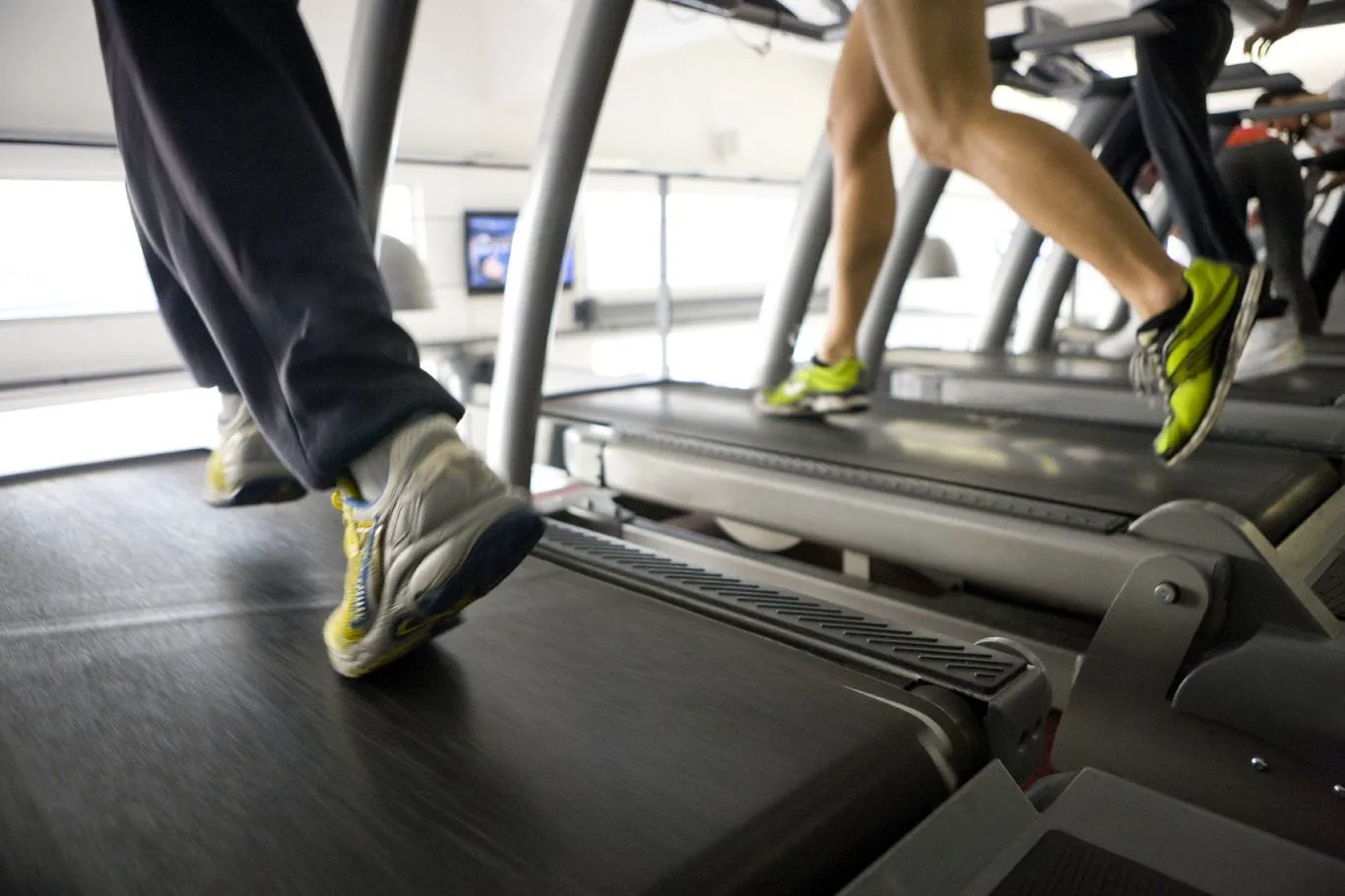
When to Stop DIY Fitness Equipment Repairs
You can safely perform basic care such as cleaning external surfaces, removing dust from accessible areas, and tightening hardware. Always refer to your manufacturer's manual to ensure tasks like lubricating components or adjusting treadmill belt alignment are approved for owner maintenance.
— By Toren, Owner & Managing Member — Back to all articles
Share: Facebook · LinkedIn · X

Fitness equipment is built to support movement, strength, and progress. But every treadmill, exercise bike, elliptical, and cable machine contains moving parts, load-bearing components, and: often: electrical systems that require careful handling.
That raises an important question: When is a small DIY adjustment reasonable, and when should you stop and call a professional?
At Heartbeat Fitness Repair, we believe equipment owners should feel confident handling basic care while also knowing where the safety line begins. A careful inspection can prevent problems. An improvised repair can create a larger one.
This guide explains what you can safely do yourself, the warning signs that require professional attention, and how a preventive maintenance plan can keep your equipment reliable for years to come.
The Basic Rule: Follow the Manual
The manufacturer’s owner manual should always be your first reference. It typically explains which tasks are considered routine owner maintenance and which require a qualified technician.
DIY is usually appropriate when the task involves:
- Cleaning external surfaces
- Removing dust from accessible areas
- Inspecting bolts, belts, cables, and covers
- Tightening hardware using the manufacturer’s instructions
- Lubricating approved components with the correct product
- Adjusting treadmill belt alignment or tension exactly as described
If the manual says “qualified technician only,” “do not open,” or “no user-serviceable parts inside,” take that instruction seriously. If you cannot find clear instructions for a repair, that is also a sign to stop.
A useful rule is simple: If you have to guess, improvise, bypass a safety feature, or open an electrical enclosure, DIY maintenance has probably reached its limit.
What You Can Usually Do Safely
Basic care is an important part of equipment ownership. It helps you identify developing problems before they become expensive or dangerous.
Clean the Equipment
Sweat, dust, hair, and debris can affect upholstery, rails, pedals, belts, and moving joints. Wipe down surfaces using products recommended by the manufacturer. Avoid spraying liquid directly onto consoles, switches, outlets, or seams where moisture could reach electronics.
Before cleaning powered equipment, turn it off and unplug it.
Perform a Visual Inspection
Look for:
- Frayed treadmill belts
- Cracked covers
- Loose bolts
- Worn pedal straps
- Damaged upholstery
- Fraying strength-machine cables
- Bent brackets
- Missing hardware
- Rust around structural or moving components
- Unusual gaps or misalignment
A visual inspection does not require technical expertise. It does require consistency. Homeowners should inspect equipment regularly, while gym operators and facility managers should have a documented inspection routine.
Make Manual-Approved Adjustments
Some treadmills require occasional belt alignment or tension adjustments. Exercise bikes may need basic seat or handlebar hardware tightened. Strength equipment may have user-adjustable components.
These tasks are safe only when performed according to the equipment’s instructions. Use the right tools, make small adjustments, and test the machine carefully afterward.
Do not continue tightening if a bolt spins freely, a bracket shifts, or the frame still feels unstable. That may indicate stripped threads, internal damage, or a larger structural issue.

Common DIY Temptations That Create Risk
Many unsafe repairs begin with a reasonable goal: save money, avoid downtime, or get one more workout in. The problem is that fitness equipment often gives incomplete clues about what is failing.
“I’ll Just Open the Motor Cover”
Treadmills and other cardio machines can contain high-voltage components, capacitors, control boards, and moving parts. Unplugging the machine does not necessarily eliminate every electrical hazard immediately.
Opening a cover can also expose wiring that is easy to damage or reconnect incorrectly. If the issue involves the motor, control board, wiring, or power supply, contact a qualified technician.
“I’ll Replace the Power Cord Myself”
A damaged power cord is a serious warning sign, not a minor inconvenience. Using an incorrect replacement, creating a poor connection, or routing the cord near moving parts can result in shock, overheating, or fire.
Stop using the equipment and arrange professional service instead of taping, splicing, or improvising a replacement.
“I’ll Bypass the Safety Key”
Never bypass a treadmill safety key, emergency stop button, interlock, or other safety system. These features exist to reduce injury risk if the user falls or loses control.
A treadmill that does not stop immediately when the safety key is removed should be unplugged and taken out of service.
“The Cable Looks Almost Fine”
Strength-machine cables can fail suddenly under load. A cable that appears only slightly frayed may already have compromised strength. Do not trim damaged strands, wrap a cable with tape, or continue using it until a professional has inspected it.
Cable and pulley problems are often straightforward to repair, but they are not worth risking an injury.
Four Reasons to Stop DIY Maintenance
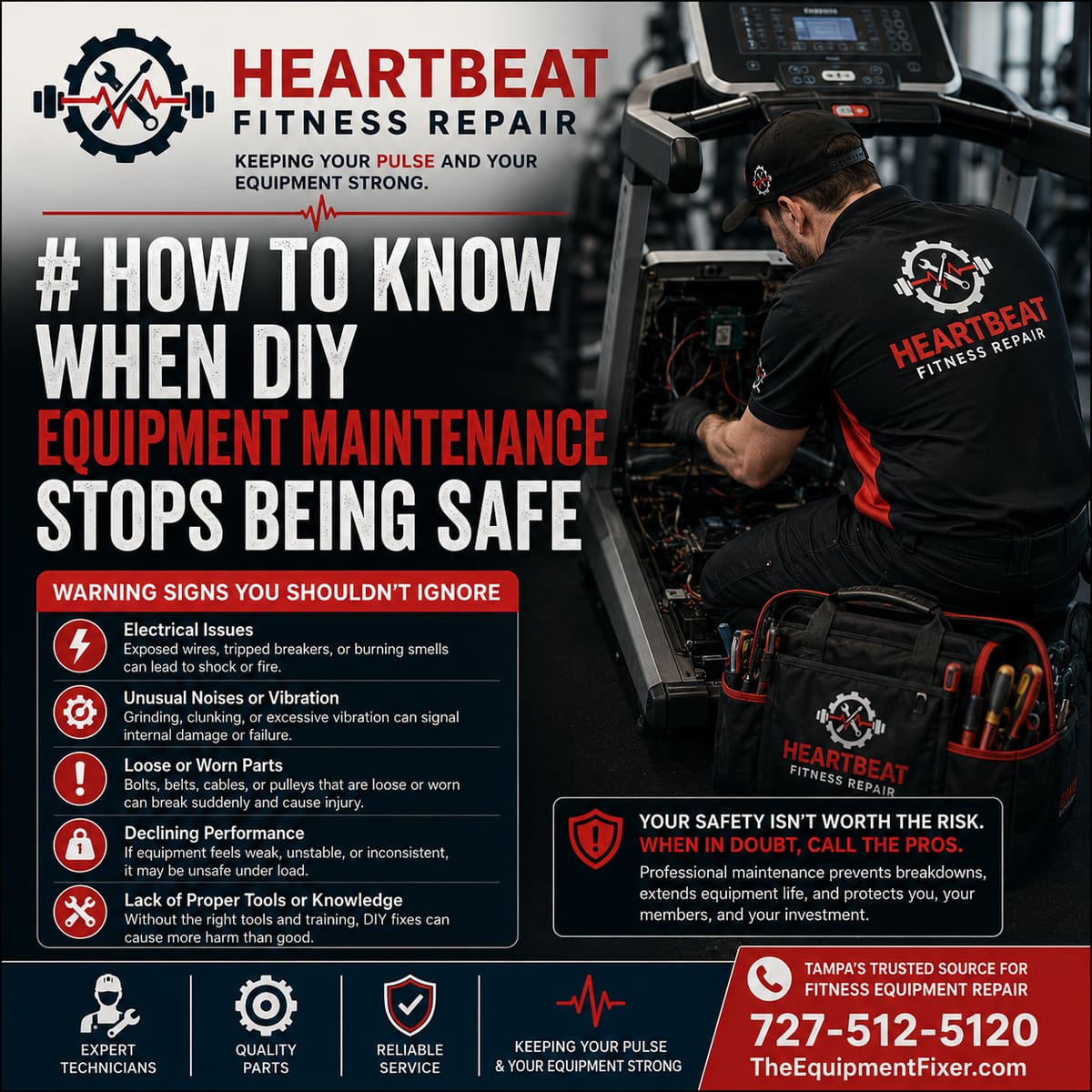
1. Electrical Hazards
Stop using the machine immediately if you notice:
- Sparks or smoke
- A burning smell
- Excessive heat
- Repeated breaker trips
- A damaged or crushed power cord
- An unresponsive console
- Unexpected speed or resistance changes
- Controls that work intermittently
Electrical faults can damage additional components if the machine continues operating. They can also create shock and fire hazards.

2. Safety Systems Are Not Working
A nonfunctional safety system makes professional service urgent. This includes:
- A treadmill belt that does not stop when the safety key is removed
- An emergency stop button that responds slowly or inconsistently
- An exercise bike whose resistance changes on its own
- A machine that starts without a normal command
- A console that freezes while the equipment continues moving
Remove the equipment from service, unplug it when appropriate, and make sure other users know not to operate it.
3. Structural Damage or Instability
Fitness equipment must remain stable under repeated and sometimes heavy loads. Call a professional when you see:
- A cracked or bent frame
- A wobbling treadmill, bike, or elliptical
- A seat or handlebar that will not remain secure
- A damaged weight stack or mounting point
- A pulley or cable anchor that is shifting
- Rust or deformation on load-bearing parts
Structural concerns are not suitable for trial-and-error repair. A machine may appear stable without a user on it but fail when loaded.
4. Unusual Noise, Vibration, or Movement
Grinding, knocking, scraping, squealing, or excessive vibration often indicates a developing internal problem. A treadmill belt that slips, grabs, accelerates unexpectedly, or repeatedly moves off-center also needs attention.
Continuing to operate equipment with these symptoms can turn a replaceable wear part into damage to the motor, deck, bearings, frame, or control system.
When to Call for Treadmill or Exercise Bike Repair
A search for “treadmill repair near me” may be the right next step when a belt will not track correctly after the manual-approved adjustment, the motor struggles under normal use, or the machine displays recurring error codes.
Professional exercise bike repair is appropriate when resistance changes unexpectedly, the crank or pedals feel loose, the frame rocks, or the drive system makes grinding sounds.
The same principle applies to ellipticals, rowers, stair climbers, and strength equipment: if the issue involves internal electronics, load-bearing parts, safety controls, or an uncertain cause, professional diagnosis is safer than replacing parts at random.
A technician can identify the root cause, inspect related components, and verify the equipment after the repair. That matters because replacing one visible part may not resolve the underlying problem.
What to Do Before the Technician Arrives
If equipment may be unsafe:
- Stop using it.
- Turn it off and unplug it if safe to do so.
- Place an “Out of Service: Do Not Use” notice on it.
- Keep children, guests, and gym members away.
- Photograph the issue and record error codes or unusual sounds.
- Note when the problem began and what happened immediately before it.
- Do not attempt additional repairs while waiting.
For a commercial facility, record the equipment location, asset number, and last inspection date. Clear information helps the technician diagnose the issue more efficiently.
How Preventive Maintenance Keeps DIY Safer
Preventive maintenance does not eliminate every failure, but it reduces surprises and helps separate routine care from professional repair.
A structured plan can include:
- Treadmill belt, deck, and alignment inspections
- Motor-compartment cleaning
- Cable and pulley safety checks
- Frame and hardware inspections
- Lubrication of approved components
- Calibration and performance testing
- Electrical and safety-system checks
- Written service reports
- Repair and replacement recommendations
Heartbeat Fitness Repair offers preventive maintenance services for residential and commercial equipment. A plan gives homeowners confidence and gives facility managers a repeatable process for protecting members, staff, equipment, and budgets.
Know the Line: and Protect Your Progress
DIY maintenance has a valuable place in fitness equipment care. Cleaning, observing, documenting, and completing simple manual-approved adjustments can extend equipment life and help you catch problems early.
But once the issue involves electricity, safety systems, structural integrity, damaged cables, or an uncertain diagnosis, the safest decision is to stop. Unplug the equipment, tag it out, and call a qualified professional.
Heartbeat Fitness Repair provides fitness equipment repair for home gyms, commercial fitness centers, and specialized facilities. Our technicians diagnose the cause, explain the options clearly, and test equipment before returning it to service.
Whether you need treadmill repair, exercise bike repair, or strength equipment repair, do not wait for a small warning sign to become an injury or a major breakdown.
Contact Heartbeat Fitness Repair or schedule service online to get a clear, professional answer.
Written Quote Before Any Work Begins
Prices shown are starting estimates — actual cost varies by brand, model, and parts availability. We always provide an exact written quote before we touch your machine, so there are no surprises on the invoice. We’re also an authorized warranty repair provider for many major manufacturers. Call 727-512-5120 for pricing on your specific unit.
Frequently Asked Questions
- What maintenance tasks can I safely perform on my fitness equipment at home?
- You can safely perform basic care such as cleaning external surfaces, removing dust from accessible areas, and tightening hardware. Always refer to your manufacturer's manual to ensure tasks like lubricating components or adjusting treadmill belt alignment are approved for owner maintenance.
- When should I stop trying to repair my exercise machine and call a professional?
- You should stop DIY efforts if the manual indicates the task is for a qualified technician or if you have to guess, improvise, or bypass a safety feature. Additionally, any task requiring you to open an electrical enclosure or one where you cannot find clear instructions should be handled by an expert.
- What warning signs suggest my equipment needs professional repair?
- Key warning signs include frayed belts, damaged cables, cracked covers, or rust around structural components. If you notice unusual gaps, misalignment, or bent brackets during your regular visual inspections, it is time to contact Heartbeat Fitness Repair for professional assistance.
- How can I contact Heartbeat Fitness Repair for assistance in the Tampa Bay area?
- You can reach Heartbeat Fitness Repair at 727-512-5120 for professional maintenance and repair services. We serve the entire Tampa Bay, FL area, including cities like Tampa, St. Petersburg, Clearwater, and surrounding counties.
- What should I expect when booking a service call with Heartbeat Fitness Repair?
- Our service call fee ranges from $149.99–$169.99 for both residential and commercial clients, which covers travel, a full diagnostic, and the first hour of labor. All repairs are performed on-site at your location, so there is nothing to haul or ship.
Related Services in Tampa Bay
- Treadmill Repair in Tampa, FL
- Treadmill Repair in Clearwater, FL
- Treadmill Repair in St. Petersburg, FL
- Treadmill Repair in Brandon, FL
- Treadmill Repair in Sarasota, FL
- All Treadmill Repair Service Areas
- Schedule a Repair — Same-Week Appointments Available
Need Fitness Equipment Repair in Tampa Bay?
Heartbeat Fitness Repair provides on-site repair for treadmills, ellipticals, exercise bikes, rowing machines, stair climbers, and strength equipment throughout Pinellas, Hillsborough, Manatee, Sarasota, and Pasco counties. Factory-trained technicians. Same-week scheduling. Nothing to haul or ship.
Call 727-512-5120 — Monday–Friday 5 AM–7 PM, Saturday 7 AM–2 PM — or book a repair online.