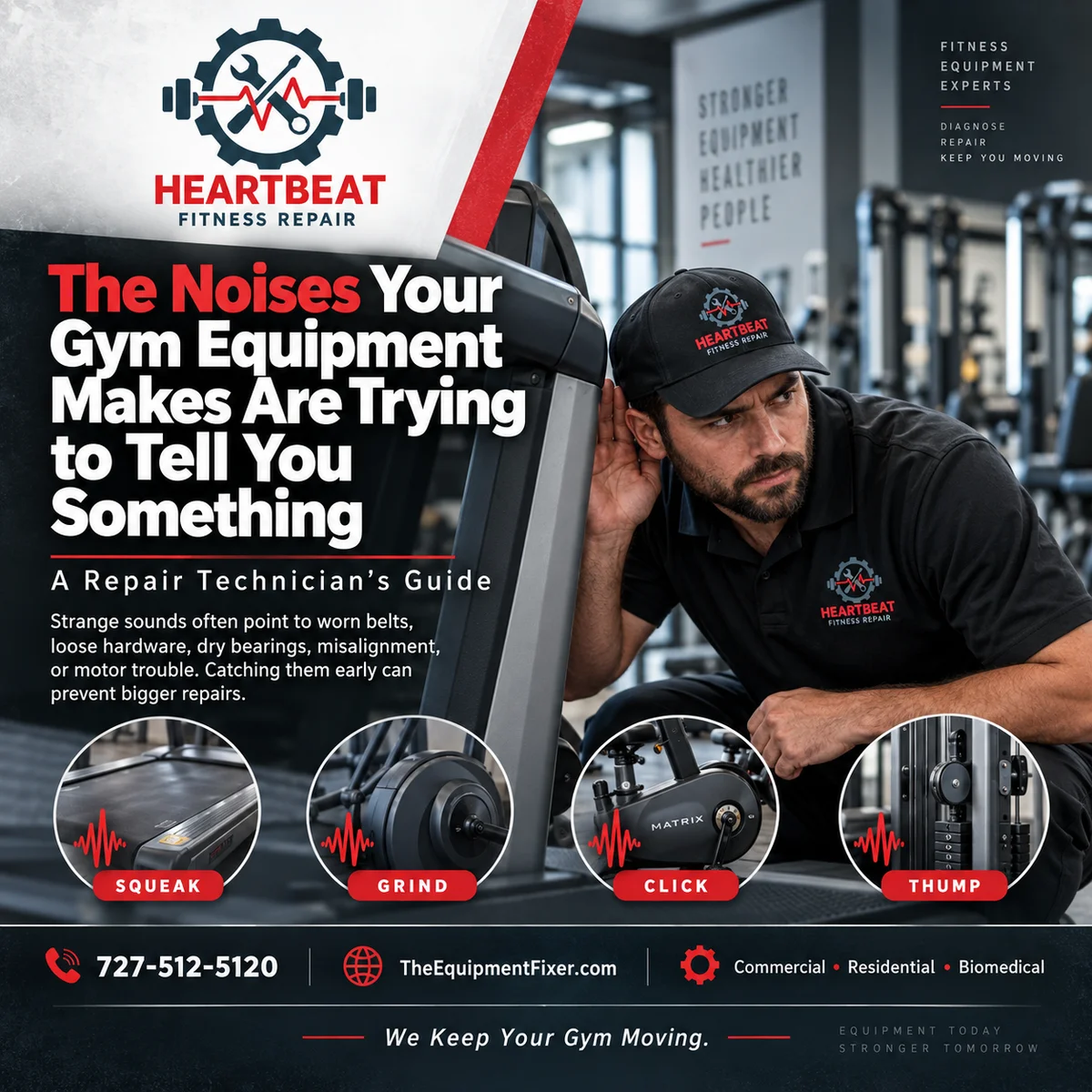
The Noises Your Gym Equipment Makes Are Trying to Tell You Something: A Repair Technician's Guide
A squeal, click, grind, or rattle from fitness equipment is usually the earliest diagnostic signal of a developing problem — a light, steady squeak is often just an early maintenance flag, while a deep grinding noise, a sudden thump, or any noise paired with slipping or unstable movement means the equipment should be taken out of service and inspected. Reading which is which, and how quickly it gets investigated, is usually what determines whether a noise turns into a simple adjustment or a major repair.
Share: Facebook · LinkedIn · X

A treadmill squeals. An exercise bike clicks. An elliptical groans on every stride. A cable machine suddenly slaps or rattles.
None of that is just background noise. It's usually the earliest diagnostic signal your equipment gives you — and a lot of expensive failures announce themselves quietly, weeks before they turn into breakdowns.
At Heartbeat Fitness Repair, we use sound, vibration, timing, and load behavior to figure out what's happening inside a machine before we ever open it up. With more than 19,000 hours of on-site work behind us, we've learned that the difference between a simple adjustment and a major repair usually comes down to how quickly a new noise gets investigated.
This guide walks through what the common sounds actually mean, whether it's safe to keep using the equipment in the meantime, and what a professional repair typically involves.
How to Listen Like a Repair Technician
Before you zero in on a specific machine, pay attention to four things:
- When does it happen? During startup, under body weight, during acceleration, or only at high resistance?
- Is it rhythmic? A noise that repeats once per belt, pedal, pulley, or flywheel rotation usually points straight to the component causing it.
- Where is it coming from? Try to narrow it down to the motor area, frame, deck, pedal, pivot, or console.
- Is anything else changing? Slipping, jerking, overheating, a burning smell, or lost resistance all raise the urgency.
A light squeak is often just an early maintenance flag. A deep grinding noise, a sudden thud, or any sound paired with unstable movement is a reason to stop using the equipment and get it looked at.
Treadmill Noises
Treadmills combine a moving belt, a walking deck, rollers, a drive motor, a motor belt, an incline system, and electronic controls — which makes where and when a noise happens especially useful.
Belt Squeal
A high-pitched squeal usually points to friction or slipping. Common causes include a dry belt and deck, incorrect belt tension, belt misalignment, a worn drive belt, or debris trapped beneath the walking belt.
If the squeal changes when someone steps onto the treadmill, the added load is exposing friction between the belt and deck. If it keeps the same rhythm with no one on it, a roller, pulley, or drive belt is more likely the source.
Urgency: Usually an early warning — but don't ignore a squeal that's getting louder or comes with any hesitation in the belt.
Typical fix: A technician checks belt condition, deck wear, tracking, tension, and lubrication needs. Depending on what they find, the fix might be as simple as cleaning and manufacturer-approved lubrication, or it might call for alignment, tension adjustment, drive belt replacement, or walking belt and deck service. Our treadmill repair service includes noise troubleshooting alongside belt, deck, roller, motor, and incline repairs.
Roller Rumble
A low rumble or rough growl from the front or rear of the treadmill usually means a roller bearing is wearing out. Because rollers turn constantly, a failing bearing tends to get louder over time and can eventually add drag and heat to the whole system.
Urgency: Schedule service soon. Stop using the treadmill if the rumble gets severe, the belt starts to hesitate, or you feel noticeable vibration.
Typical fix: The technician isolates the front and rear rollers, checks bearing play and belt tracking, and replaces the worn roller or bearing as needed.
Motor Whine
A new high-pitched whine from beneath the motor hood can come from the drive motor, motor belt, cooling fan, or motor control system. Some motor noise is normal — but a change in pitch, especially under load, is worth paying attention to.
Urgency: Have a mild new whine inspected soon. Stop using the treadmill immediately if it comes with a burning smell, speed surging, overheating, or a tripped breaker.
Typical fix: Repair can involve cleaning the motor compartment, correcting belt alignment, replacing a drive belt, servicing the motor, or diagnosing the controller and wiring. Always unplug the treadmill before any owner-level cleaning, and never reach into the motor compartment while components are moving.
Deck Friction and Scraping
A dragging or scraping sound beneath the belt usually means excessive friction between the belt and deck. A worn deck can develop rough spots that increase motor load and accelerate belt wear.
Urgency: Continued use can turn a manageable maintenance issue into a motor or control-board failure.
Typical fix: A technician evaluates the belt underside and deck surface, checks lubrication, measures tracking and tension, and recommends resurfacing or replacement if the deck is damaged.
Exercise Bike Noises
Exercise bikes move force through pedals, crank arms, bearings, a belt or chain, a flywheel, and a resistance system. Because the rider supplies the power, a lot of problems only show up under load.
Pedal Click
A click that happens once per pedal stroke usually traces back to a loose pedal, crank connection, cleat, or bearing. If it only clicks when you push down hard, the joint is likely shifting under load.
Urgency: Usually an early warning, but a loose pedal or crank should get corrected before it strips threads or damages components.
Typical fix: The technician checks pedal tightness, crank bolts, bearings, and spindle interfaces — and on indoor cycling bikes, the cleat and shoe contact points too.
Crank Knock
A dull knock or clunk through the pedals can mean looseness or wear in the crank arms, bottom bracket, spindle, or frame connection.
Urgency: Stop riding if the crank wobbles, the pedal feels unstable, or the knock comes with resistance loss.
Typical fix: Repair can mean tightening and torquing hardware, replacing crank bearings, servicing the bottom bracket, or correcting a damaged interface.
For recurring clicks, grinding, or resistance problems, professional exercise bike repair can catch these before the damage spreads into the flywheel or drive system.
Flywheel Grind
A grinding or rumbling sound from the flywheel area generally means worn bearings, misalignment, or contact between the flywheel and a guard.
Urgency: Stop using the bike until it's inspected. A seized or damaged bearing can make the flywheel unsafe and damage other drive components.
Typical fix: A technician checks flywheel alignment, bearing condition, belt or chain tracking, and resistance components before replacing or adjusting the affected parts.
Belt Squeal
A squealing bike belt can be loose, misaligned, contaminated, or worn. On some models, the belt can slip as resistance increases.
Urgency: Schedule service soon, especially if the pedals surge or resistance feels inconsistent.
Typical fix: Repair can include belt cleaning, alignment, tension adjustment, or replacement. Never apply lubricant to a drive belt unless the manufacturer specifically calls for it.
Elliptical Noises
Ellipticals have a lot of pivot points, rollers, linkages, and bearings. A sound that repeats with every stride is especially useful for narrowing down the cause.
Pivot Squeak
A squeak at the arms, pedal arms, or main frame pivots usually points to dry bushings, worn spacers, or loose hardware.
Urgency: Usually an early maintenance signal — but ignoring it lets movement and wear develop in the joint.
Typical fix: A technician checks fasteners, bushings, pivot shafts, and manufacturer-approved lubrication points. A worn bushing often needs replacing rather than just more lubricant.
Rail Drag
A scraping or dragging sound under the foot platforms can come from dirty rails, worn rollers, damaged rail surfaces, or misalignment.
Urgency: Stop using the elliptical if the foot platform catches, jerks, or feels uneven.
Typical fix: Service typically includes cleaning the rails, inspecting rollers for flat spots, checking alignment, and replacing damaged rollers or rail components. Our elliptical repair service covers all of these components in a single visit.
Bearing Groan
A deep groan from the flywheel, axle, or linkage area usually signals bearing wear. If you can feel roughness or vibration through the handles or foot platforms, the issue is further along than the sound alone suggests.
Urgency: Treat a bearing groan as a prompt-service issue. Stop using the machine if the movement gets rough or unstable.
Typical fix: The technician isolates the bearing by checking each rotating assembly, then replaces the failed bearing or related component and verifies smooth operation through the full stride.
Strength Equipment Noises
Strength machines rely on cables, pulleys, guide rods, selector pins, weight stacks, and structural hardware. Unusual sounds here deserve extra attention, since a failure can release stored weight or affect control.
Cable Slap
A cable slap or sharp snap can mean the cable is loose, stretched, misrouted, frayed, or suddenly taking up slack.
Urgency: Stop using the machine immediately if the cable shows fraying, kinks, broken strands, or inconsistent tension.
Typical fix: A technician inspects the entire cable path, pulley alignment, attachment points, and termination hardware. A compromised cable gets replaced — never patched.
Pulley Squeal
A squealing pulley often has a dry or failing bearing, contamination, or misalignment. A pulley can also squeal when a cable is rubbing against its edge.
Urgency: Schedule service promptly. Stop using the station if the pulley wobbles, binds, or the cable starts climbing out of its track.
Typical fix: Repair can involve cleaning, alignment, bearing replacement, pulley replacement, and cable tension adjustment. Our strength equipment repair service covers cable, pulley, and guide rod systems.
Guide Rod Rattle
A rattle from the weight stack can come from loose guide rods, dry or worn bushings, misaligned plates, or a selector pin that isn't fully seated.
Urgency: Stop using the machine if plates catch, drop unexpectedly, or the selector pin won't seat securely.
Typical fix: The technician checks rod straightness, bushings, stack alignment, pin engagement, and mounting hardware. Guide rods may just need cleaning and approved lubrication, while worn bushings or damaged rods require replacement.
When to Stop Using Equipment Immediately
Don't "test it one more time" if a noise shows up with any of the following:
- Burning smell or visible smoke
- Sudden speed or resistance changes
- Belt, pedal, or weight-stack slipping
- Jerking, catching, or loss of control
- Deep grinding or metal-on-metal contact
- Frayed cables or loose structural hardware
- Overheating or repeated breaker trips
If you're searching for treadmill repair near you or just looking for dependable gym equipment repair, look for a technician who diagnoses the cause — not one who just quiets the symptom.
Let Heartbeat Fitness Repair Decode the Noise
A new sound is your equipment asking for attention. Responding early protects the machine, reduces downtime, and helps keep a small maintenance issue from turning into a major failure.
Heartbeat Fitness Repair provides professional fitness equipment repair for homeowners, gyms, studios, facilities, and commercial operators. We service treadmills, exercise bikes, ellipticals, strength equipment, and more, with the experience to tell you exactly what the sound means and explain the repair clearly.
Frequently Asked Questions
- What does a squealing or squeaking noise from gym equipment usually mean?
- A squeal or squeak is most often friction- or lubrication-related — a dry treadmill belt and deck, a worn drive belt, a dry pivot bushing on an elliptical, or a loose or contaminated exercise bike belt. It's usually an early warning rather than an emergency, but a squeal that's getting louder or changing under load should be inspected before it develops into a bearing or motor problem.
- Is it safe to keep using equipment that just started making a new noise?
- It depends on the noise. A light, steady squeak with no change in performance is usually safe to keep using for a short time while you schedule service. A grinding, knocking, or rattling noise — or any noise paired with slipping, jerking, resistance loss, or overheating — means the equipment should be taken out of service until a technician looks at it.
- What noises mean I should stop using equipment immediately?
- Stop immediately for a burning smell or visible smoke, sudden speed or resistance changes, belt or weight-stack slipping, jerking or loss of control, deep grinding or metal-on-metal contact, frayed cables or loose structural hardware, or overheating and repeated breaker trips. These signal a failure that's already in progress, not an early warning.
- Can lubrication fix a noisy treadmill, bike, or elliptical?
- Sometimes — a dry treadmill belt and deck or a dry elliptical pivot bushing often responds well to manufacturer-approved lubrication. But lubrication won't fix a worn bearing, a stretched or misaligned belt, a loose crank, or a damaged roller, and using the wrong lubricant (or lubricating a drive belt that shouldn't be lubricated) can make the problem worse. A technician identifies which noises are lubrication issues and which need a mechanical repair.
- How does a technician figure out what's causing a noise?
- By listening for four things: when the noise happens (startup, under load, at high resistance), whether it's rhythmic (once per rotation points to a specific component), where it's coming from (motor, frame, deck, pivot, console), and whether anything else is changing (slipping, overheating, lost resistance). Combining those clues with a hands-on inspection of the suspected component lets a technician diagnose the cause before deciding what to repair.
Related Services in Tampa Bay
- Preventive Maintenance in Tampa, FL
- Preventive Maintenance in Clearwater, FL
- Preventive Maintenance in St. Petersburg, FL
- Preventive Maintenance in Brandon, FL
- Preventive Maintenance in Sarasota, FL
- All Preventive Maintenance Service Areas
- Schedule a Repair — Same-Week Appointments Available
Fitness Equipment Diagnostics and Repair Throughout Tampa Bay
- Treadmill Repair Service Areas
- Exercise Bike Repair Service Areas
- Elliptical Repair Service Areas
- Strength Equipment Repair Service Areas
- Preventive Maintenance Plans — Catch Noises Before They're Repairs
- Schedule a Repair — Same-Week Appointments Available
Need Fitness Equipment Repair in Tampa Bay?
Heartbeat Fitness Repair provides on-site diagnostics and repair for treadmills, exercise bikes, ellipticals, and strength equipment throughout Pinellas, Hillsborough, Manatee, Sarasota, and Pasco counties. Factory-trained technicians. Written quotes before any work begins. Same-week scheduling.
Call 727-512-5120 — Monday–Friday 5 AM–7 PM, Saturday 7 AM–2 PM — or book a repair online.
Written Quote Before Any Work Begins
Prices shown are starting estimates — actual cost varies by brand, model, and parts availability. We always provide an exact written quote before we touch your machine, so there are no surprises on the invoice. We’re also an authorized warranty repair provider for many major manufacturers. Call 727-512-5120 for pricing on your specific unit.